

Writes Heather Park, Head of Walter House and Teacher of Design, Engineering & Technology
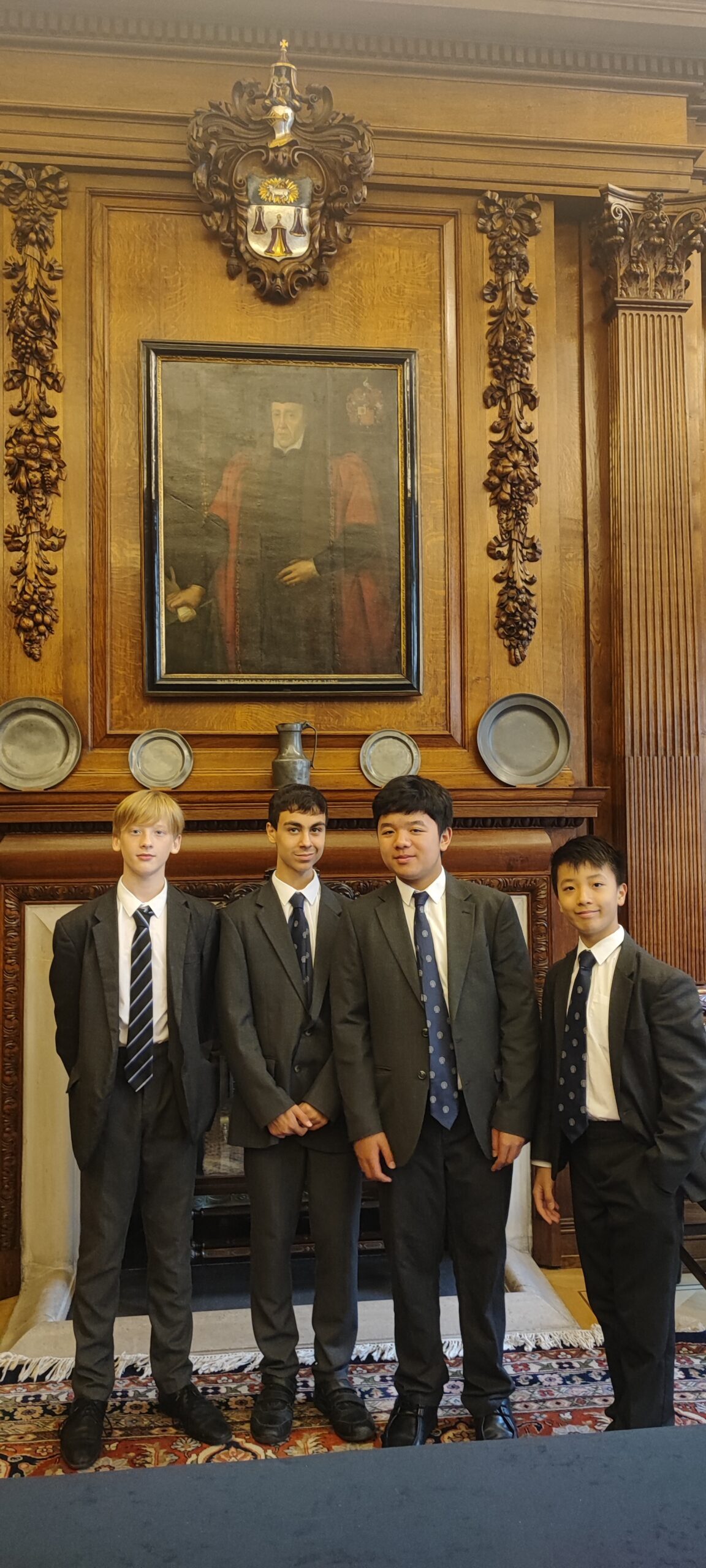
Thirty-six boys, from the Fifths and Sixth Form, along with four teachers, recently returned from an unforgettable, action-packed four-day Design, Engineering & Technology trip to Bologna, Italy.
The adventure began with an early 4:30 am airport meeting, kicking off a whirlwind itinerary that saw the group immerse themselves in the world of high-performance engineering with exclusive tours of the Lamborghini, Ducati, Ferrari, and Pagani factories.
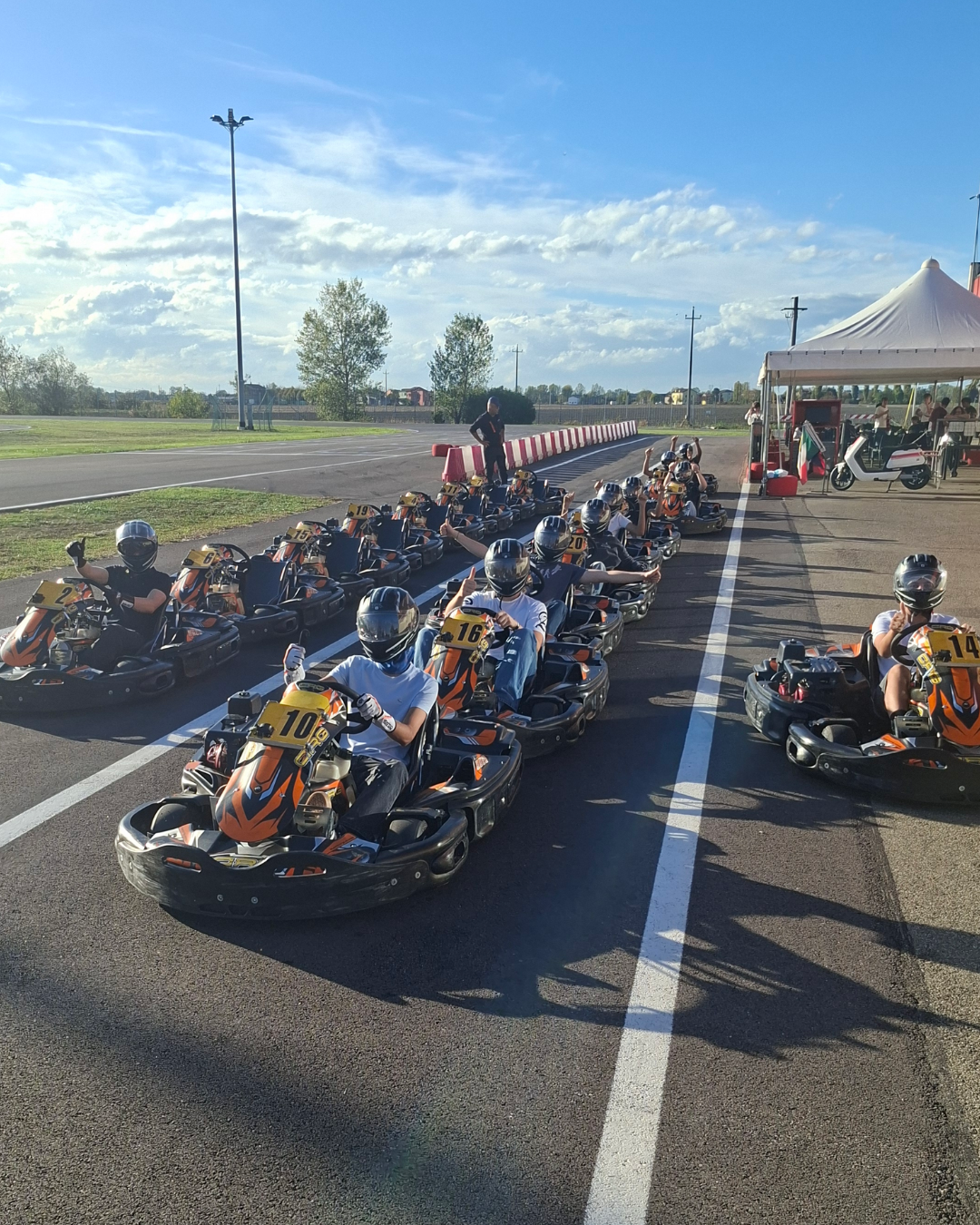
Beyond the cutting-edge automotive technology, the boys embraced Italian culture by making fresh pasta, exploring the historic streets on a guided tour of Bologna, and letting off some steam on the go-karting track. Returning home on Thursday at 9:30 pm, the students were brilliant ambassadors for the school throughout, coming away thoroughly inspired by an educational and truly fabulous experience.
Writes Isaac G. (U6th)
Our time at Lamborghini kicked off in their showroom. In here, we were surrounded by all shapes and sizes of Lamborghini, both new and old. While indulging in the sights of their sharp-looking, fiercely stunning motors, we were soon whisked off to put our phones and cameras under lock and key and shown a map of the factory area. It was here that the guide showed us our target: the Urus factory. As the model produced in the highest volume, Urus was given its own subsection of the factory campus, and we were off in a minibus to give it a peek.
As we rode down the streets of the factory, we were surrounded by a light traffic of low, fierce vehicles drifting around the campus. Following our short yet excited sightseeing venture, we reached the Urus warehouse. As we set foot in this production powerhouse, a huge industrial sound hit our ears. After all, around us laid every stage of an assembly line, from the ‘supermarket’ of wing mirrors, headlights and any other Urus part imaginable (proudly Lamborghini, if you set aside the presence of the occasional familiar four German rings on some), to the vigorous testing environments pushing the freshly compiled hunks of mental to their absolute limits.
We were taken step by step through the process, through every half-hour stage of the car’s assembly. The cars drifted between these stages in the factory, effortlessly and automatically floating a two-and-a-half tonne four-by-four across the factory floor. At the beginning of the line were merely ideas of a vehicle, at the end were solid SUVs ready for the road. The guide showed us every stage of the frame evolving slowly into the final product. This ranged from the batteries being fitted to the suave leather interiors being attached, prepared bespoke for a customer to enter luxury upon them. A highlight was most certainly the ‘marriage’ of the engines and frame, where the V8 beast was lifted through the newly assembled exteriors by a group of Italian experts, no doubt everybody’s dream wedding. Regardless, every few minutes, we heard the doors slide open to facilitate the escape of a crisp new Urus into the wild for a taste of the fresh air in its final phase of testing before its new life in the hands of a Lamborghini customer.
Overall, seeing the very place all the Uruses (Uri, I suppose?) come to life was unforgettable. It revealed the environment of a real car assembly line, producing precision motorcars for the hands of a few fortunate soon-to-be luxury car drivers. Seeing how the production of these 31 cars a day can add up to the ten thousand in the wild, all from this one warehouse in Bologna, is an almost unfathomable thought, made ever so slightly more fathomable by the sights before our very eyes. It is safe to say Ferruccio Lamborghini’s dream of a ‘perfect car’ when looking at his Ferrari 250 GT was fulfilled in the numerous elegant automobiles leaving his facility.
Writes Sulaiman K. (5ths)
During our trip we visited the Ferrari museum where we had an amazing experience, starting with a talk about Ferrari the brand, the marketing and branding strategies they use, and an overview of their car series. We were taught about the history of the brand dating back to 1939 and felt some of the leathers and materials used in their cars.
Then, we had a tour of the museum where we were shown exhibits of multiple rare cars from the 12 Cilindri, otherwise known as the ‘Dodici’ to the F40 and one offs such as the SC40. We also saw panels of the cars such as the buttress of the Monza SP1 and the full shell of the 12 Cilindri.
The museum had a full selection of Ferraris such as modern supercars and hypercars, some of the oldest Ferrari prototypes and racing machines such as their ‘Hall of Fame’ featuring eight F1 cars, and the 499P, a menacing track machine.
Writes Ayaan S (U6th)
Our penultimate day of the trip was by no means less busy than the others, starting off with an exceptional tour through the Ducati Factory and Museum. The array of motorbikes in the Museum was simply stunning, with a full walk through the different eras of the brand, showcasing changing design trends over the years. The factory tour let us get up close to most of the assembly and production lines, seeing things such as the crankshaft and camshaft manufacturing line, where they machined them from raw metal castings and ground the bearing surfaces for the final finish.
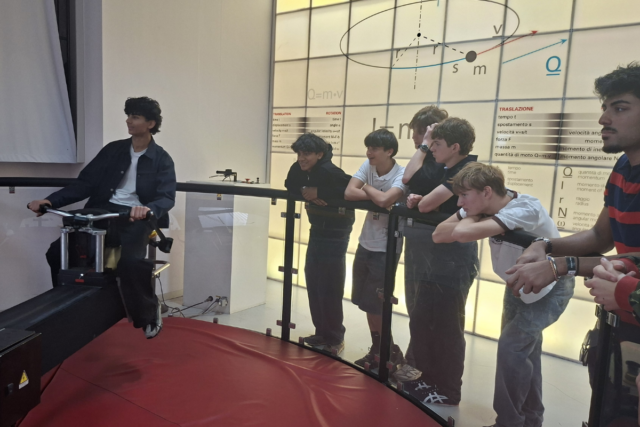
Following on was a Physics workshop which masterfully explained the forces which motorbikes experience during cornering, acceleration and braking. We learned about the gyroscopic effect from the wheels and how it forces riders to counter-steer and saw a demonstration on how mass affects sliding versus rolling friction highlighting design decisions made to minimize this in the engine. This was complemented by a large array of demonstrations, including a rather sketchy looking centrifuge with a bike seat affixed to the end. This naturally led to an engine, clutch and gearbox disassembly where we were shown Ducati’s Desmodromic camshaft. This system uses an extra cam to close the intake and exhaust valves instead of a spring, achieving a higher maximum redline more reliably while reducing weight, hence giving Ducati’s bikes a performance advantage.
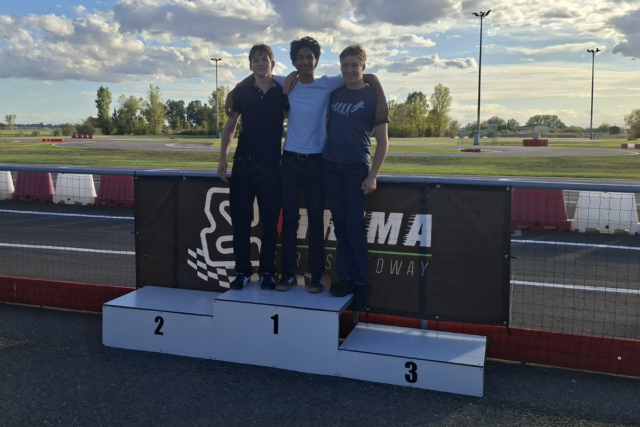
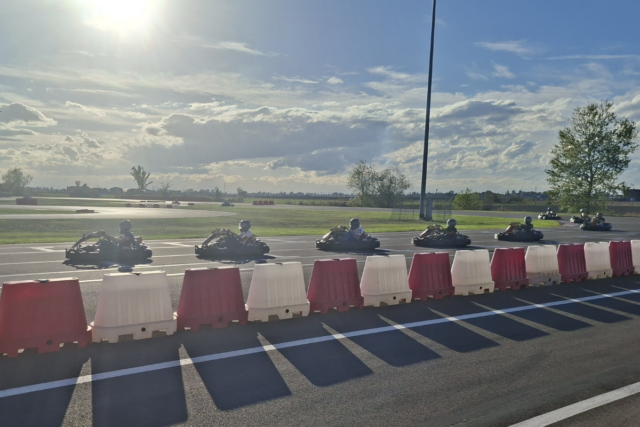
Following this we boarded the coach to visit Extrema Karting which was located in the centre of the countryside plains, surrounded by lush fields and a picturesque view of the Apennine mountain range. We were greeted by the empty Italian asphalt waiting for our rabble of ecstatic drivers to chew up the track. After a brief safety briefing in which we found out why the Italians are such fierce drivers – the words “race” and “war” seem to be used interchangeably in Italian. The wide yet flowing layout paired with the extremely well-handling karts making for a proper challenge. It was thoroughly enjoyed by all, including the more tentative teachers of the group who were rightfully worried, considering the standard of driving from some…
Writes Xander M. (U6th)
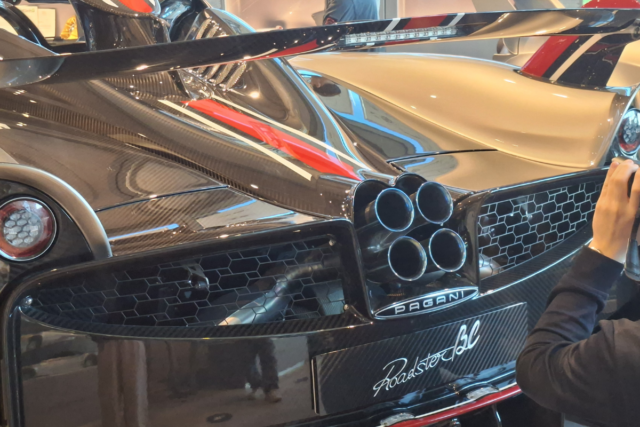
Starting the final day of the trip, we knew to expect something special. We ate our breakfast, checked out and loaded the coach for the ride to our final manufacturer, Pagani. Upon our arrival, the first thing you notice is the windows, or more accurately the lack of them. The entire factory is clad in one-way mirrors, allowing a perfect view to the outside world but keeping the mechanical masterpieces hidden inside. We split into our groups and began the experience.
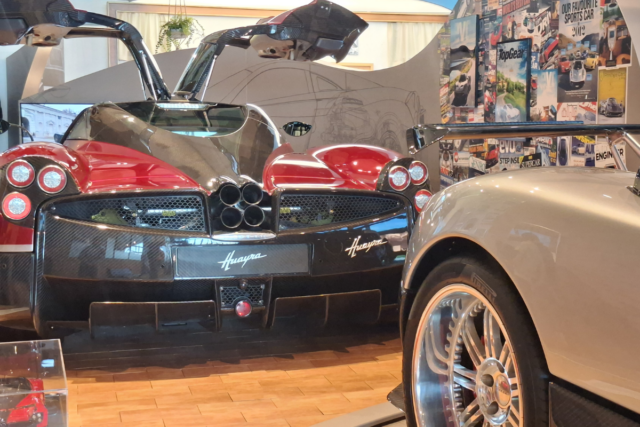
I was part of the group that started with the museum first, looking back through Pagani’s history, starting from Horacio Pagani’s childhood dream through designing the Lamborghini Countach before he started Moderna Design (now Pagani), a company specialising in carbon fibre research. After this look into the past, we were introduced to the Zonda C12, the first car from Pagani Automobili. Walking around the museum we were told about all the various cars on display, from the 100+ unit Huayra Roadster and Coupe to the single unit, race-only Pagani Zonda Revo Barchetta – Horacio’s dream car. We rounded out the museum looking at the “film” Pagani, the car supplied to Hollywood for films such as Transformers: Age of Extinction.
After this, we moved into the factory (although we thought it was closer to a showroom). Upon entering you are in this stone brick corridor with arch windows looking into the interior construction workshop – a pristine room where every single piece of upholstery for every car produced by Pagani will be handcrafted. At the end of the corridor, the space opens up into the main assembly area. On the right, there is their clocktower, placed inside the factory. Below that is a row of completed cars ready to go to customers. Looking left you will see three rooms, the first is the upholstery room, beyond that is a screened room for the next one-off car and after that is the press room, where every new vehicle will be revealed to the world. In the centre of the room, you have the cars being worked on and off to the far side you have a green wall with their logo. The entire space is being overlooked by the composites workshop where the carbon fibre for the cars is carefully cut out, laid out and cured into the parts that will make the vehicles, and the customer specification area, where every customer will make their car unique to them. They say it takes 36 months to build a Pagani: six for manufacture and thirty to make sure the car is to the customer’s dream specification (this has included options like ground diamonds in the paint). Following this room, we were taken to see the carbon fibre work area and curing machines, before being shown a few of the up to forty carbon fibre variants used in every car. After this, we were taken back out of the factory to the gift shop.
As I mentioned earlier, Pagani came from a composites company, and it shows. In the gift shop all of the cabinets and shelves are constructed from carbon fibre, the floor is a mix of tile and carbon fibre and even the sinks in the toilets are constructed from this exceptional material. Pagani was breathtaking, the cars were unique and the factory was closer to a showroom than the more typical factories of Ducati and Lamborghini. For reference to how few cars Pagani produce, Lamborghini produce more cars in a day than Pagani produce in a year.
After all of that, there was one Italian specialty we hadn’t yet tried on the trip: gelato. To get the best experience, we got back on the coach to the Carpigiani Gelato University for a museum tour of the history of gelato and two scoops at their store. Carpigiani is responsible for 35% of the global ice cream machines and 60% of the artisanal gelato machines, so it is safe to say we went to the right place. Our tour took us on a trip back to the very start of gelato, when it was a cream-flavoured delicacy served in shot glasses, through the early, hand-powered gelato machines, to the more modern fully autonomous machinery developed by Carpigiani in 1944. To finish off the visit, we stopped by their store for two scoops each and, somewhat unsurprisingly, it was the best gelato I have ever had.