Choosing GCSE Subjects at Merchant Taylors'

Dr. Jane Evans, Deputy Head (Academic), sets out how the process works, what each pupil must study, and the practical questions that can help guide a confident choice. Her central message is simple: take advice, think ahead where helpful, and choose a combination that reflects each boy’s strengths and interests.

In the coming days, our Fourth Form (Year 9) boys will finalise their GCSE subject choices – an exciting step, and one that deserves careful thought. With our GCSE Information Evening next Monday evening, and the deadline for decisions next week, we are sharing this Q&A to help pupils and parents feel well-informed and well-supported.

10
Academic slots to fill including compulsory subjects
GCSE OPTIONSGCSE OPTIONSGCSE OPTIONSGCSE OPTIONSGCSE OPTIONSGCSE OPTIONSGCSE OPTIONS

Why do we ask pupils to choose their GCSE subjects in the Fourth Form?

Dr. Evans: The Spring Term of the Fourth Form is the point at which boys are ready to start making more intentional choices about the curriculum that will shape their Fifth Form and beyond. We begin GCSE teaching early in the Summer Term, so we need those decisions in place by the middle of March in order to build the timetable, set groups, and make sure each boy is properly supported from the start. It’s an important milestone – but it doesn’t need to feel daunting. Our job is to guide pupils carefully so they make choices that suit them.

What does the timetable structure look like – how many subjects does each pupil take?

Dr. Evans: Each pupil has ten academic slots to fill, and he needs to fill all ten. Some of those are compulsory, and some are optional. The overall aim is a balanced curriculum that keeps doors open, while also allowing boys to develop areas of genuine interest and strength.

Which subjects are compulsory for everyone?

Dr. Evans: All pupils take English Language, English Literature, Mathematics, and Science. In addition, every pupil must choose at least one Modern Foreign Language from French, German, or Spanish. Those are the foundations of the curriculum and they provide strong preparation for Sixth Form study – whatever a pupil’s future direction.
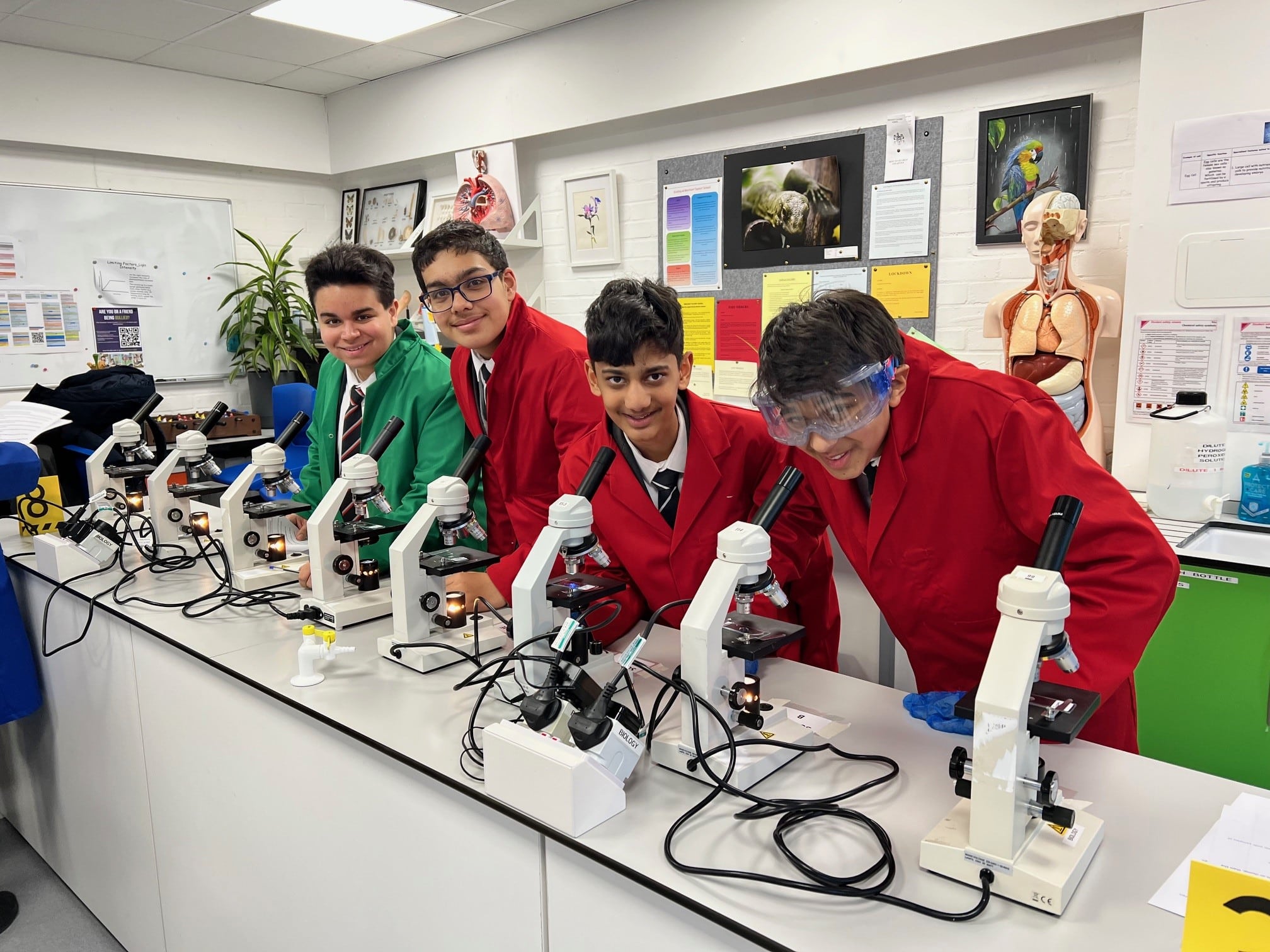

How does Science work – what’s the difference between Triple Science and Double Science?

Dr. Evans: Our default pathway is Triple Science, which results in three GCSEs across Biology, Chemistry and Physics. Some pupils take Double Science, which leads to two GCSEs, and includes a small amount of additional time each week for targeted learning enhancement (in the Autumn Term of Divisions). We will guide boys and families carefully on the best route for them – this is not a “one size fits all” decision.

What optional subjects are available beyond the compulsory core?

Dr. Evans: Pupils choose the remaining subjects from a broad range including areas such as Humanities, Languages, Arts, Technology, and Sport – for example: History, Geography, Religious Studies, Art & Design, Design & Technology, Computer Science, Drama, Music, and Classical options such as Latin, Greek, or GRATIN (Greek & Latin Combined). The important thing is that boys choose thoughtfully – both in terms of enjoyment and in terms of keeping future options open.

Some courses are GCSE and others are IGCSE – what’s the difference?

Dr. Evans: Some departments offer GCSE and others offer International GCSE (IGCSE). The reassurance is simple: both are recognised as being of equal value by universities and employers. Each Head of Department selects the syllabus and exam board they feel is best suited to our pupils, and those decisions are reviewed regularly. What matters most is the quality of teaching, the suitability of the course, and the pupil’s engagement with the subject.

What’s the timeline – when do pupils need to decide?

Dr. Evans: During the Spring Term, departments start talking to pupils about what GCSE study in their subject looks like, and what makes a good fit. We ask pupils to confirm their choices by the middle of March, and tutors then enter these into our systems for planning. GCSE teaching begins early in the Summer Term of the Fourths, so we want boys to feel confident and settled in their choices before then.

Who should pupils speak to for advice?

Dr. Evans: I would actively encourage boys to seek advice from multiple sources. Tutors are central – they know their tutees well and can help him think holistically. Subject teachers and Heads of Department are also important for explaining what GCSE study really involves. Older pupils can be very helpful too, particularly those who have recently gone through the process. And I always emphasise the role of parents: these decisions are best made through calm conversation at home as well as in school.

How far ahead should boys be thinking – do they need a career plan at 14?

Dr. Evans: Not at all. We do not expect pupils to know exactly what they want to do. However, it is helpful to start thinking in a broad way: What do I enjoy? Where do my strengths lie? Are there any areas I might want to keep open?

In a small number of cases, subject choices made now can affect the options available later on – particularly when thinking ahead to A Levels and, eventually, university courses. For boys who already have a strong interest (for example, in certain sciences, languages, or specialist pathways), it can be useful to look at whether there are any subject requirements for particular courses. Our Careers Department is always happy to help with that, and Fourths will also have a Careers Day on Wednesday, when they will meet OMTs, begin to explore some possible future pathways, and think about the skills they will want to develop for the future.

What should pupils prioritise when they’re deciding?

Dr. Evans: I would put it in three parts:

  • Enjoyment and interest: Boys typically perform best in subjects they genuinely like and are curious about.
  • Strength and aptitude: If a pupil is thriving in a subject, that matters.
  • Balance and breadth: A well-rounded set of GCSEs helps keep options open for Sixth Form.

How much should pupils rely on their Fourth Form exam results when choosing?

Dr. Evans: Exams are useful, but they are only one snapshot. That’s why we ask pupils to make their choices before Fourth Form end of year exams. We place greater weight on progress over time, teacher feedback, and the pupil’s own sense of what motivates him. A boy’s day-to-day engagement and consistency across the year often tells us more than one set of exam papers.

Can pupils change their minds later?

Dr. Evans: This is the point I most want families to take seriously: once choices are made and the timetable is built, moving to a different subject later is not always possible. That isn’t to be inflexible – it’s simply the reality of building a workable curriculum, class sizes, staffing and exam courses. So the key is to make a careful decision now, using the advice available.

Will every optional subject definitely run?

Dr. Evans: We always endeavour to meet pupils’ choices, but we cannot forecast demand with complete certainty. That means we cannot absolutely guarantee that every optional course will run in a given year. Where numbers affect viability, we communicate clearly and as early as possible, and we support pupils in making an alternative choice that still suits them well.

If a family is unsure, what’s your final advice?

Dr. Evans: Try not to overcomplicate the process, but do make good use of the next few days.  If he has not done so already, encourage your son to speak to his Tutor and subject teachers, reflect on the subjects he most enjoys, and think carefully about keeping future options open. Our GCSE Information Evening on Monday will be an excellent opportunity to ask questions and talk to key members of staff before choices are finalised next Thursday.

If any uncertainty remains, please do get in touch with Tutors, Heads of Section, Heads of Department, or with me directly.  Our aim is for every pupil to feel well supported in making a considered and confident choice.

Where next?
Get in Touch

Joining at 11+

Book a Visit

Joining at 16+