
Writes Michael Hale, Head of History
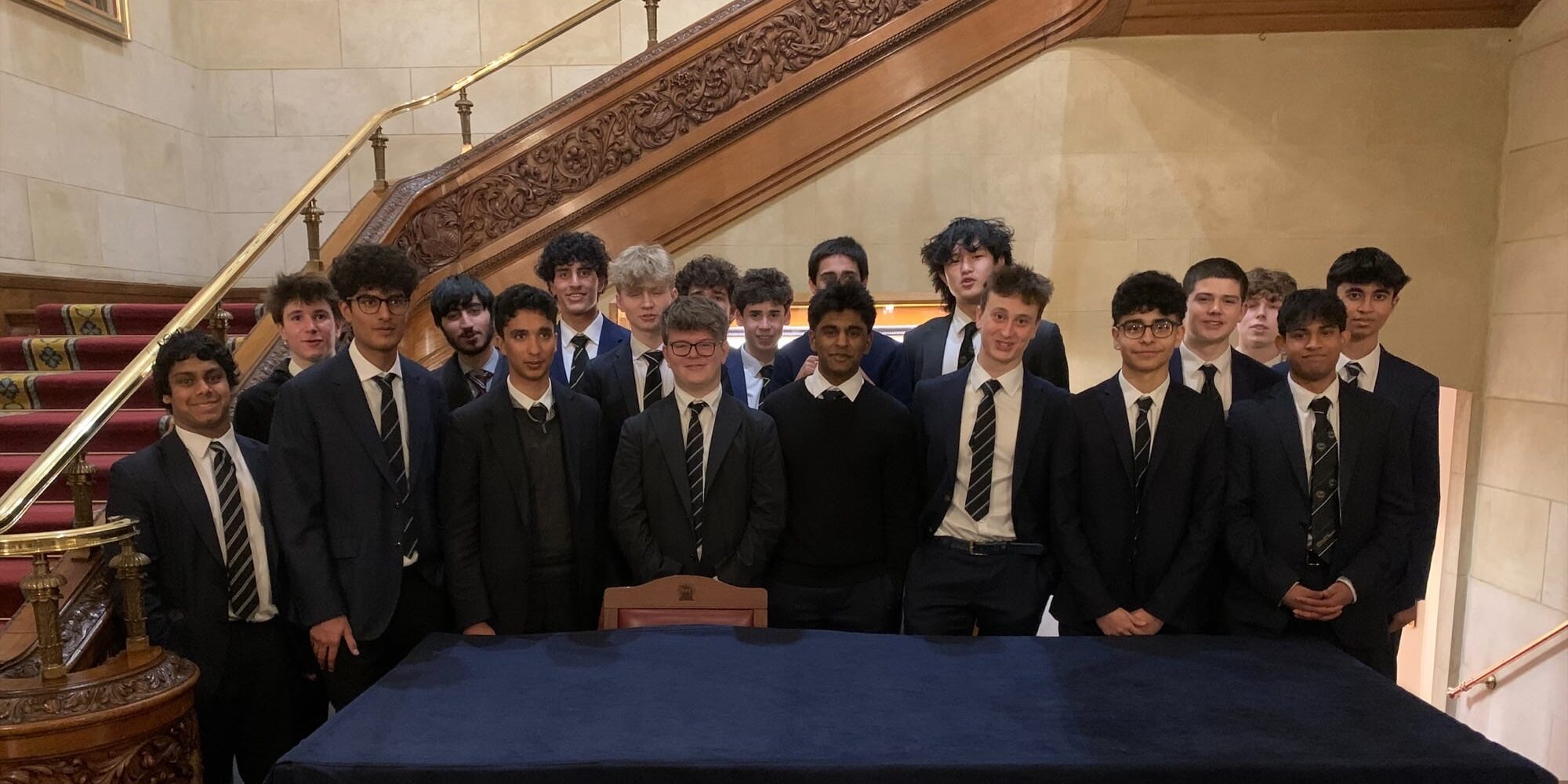
The Bulstrode Whitelocke Society enjoyed a visit to the Merchant Taylors’ Hall on Tuesday 24 February. The objective of the evening was to learn about the history of the Hall and its Treasures.
The Society was welcomed by Brigadier Christopher Coles in the Drawing Room and listened to a fascinating talk given by Professor Matthew Davies about the history of the livery company and the Hall. The boys then rotated through a carousel comprised of the Great Hall, the Kitchens and Crypt, the Court Room, and an Object Session in the Library.
Stephen Freeth regaled the boys with a brief history of the Great Hall. Although medieval in origin, it was dreadfully damaged by eight incendiary bombs during the Blitz on 17 September 1940. Therefore, the beautiful Hall that greets visitors today was repaired and conceals much of the original building first referenced as ‘Taillourshalle’ in 1391.
Professor Matthew Davies introduced the boys to the Great and Small Kitchen, both examples of medieval kitchens still in use. He then led us into the subterranean gloom of the Crypt and discussed the origins of the medieval stone-vaulted space from circa 1375.
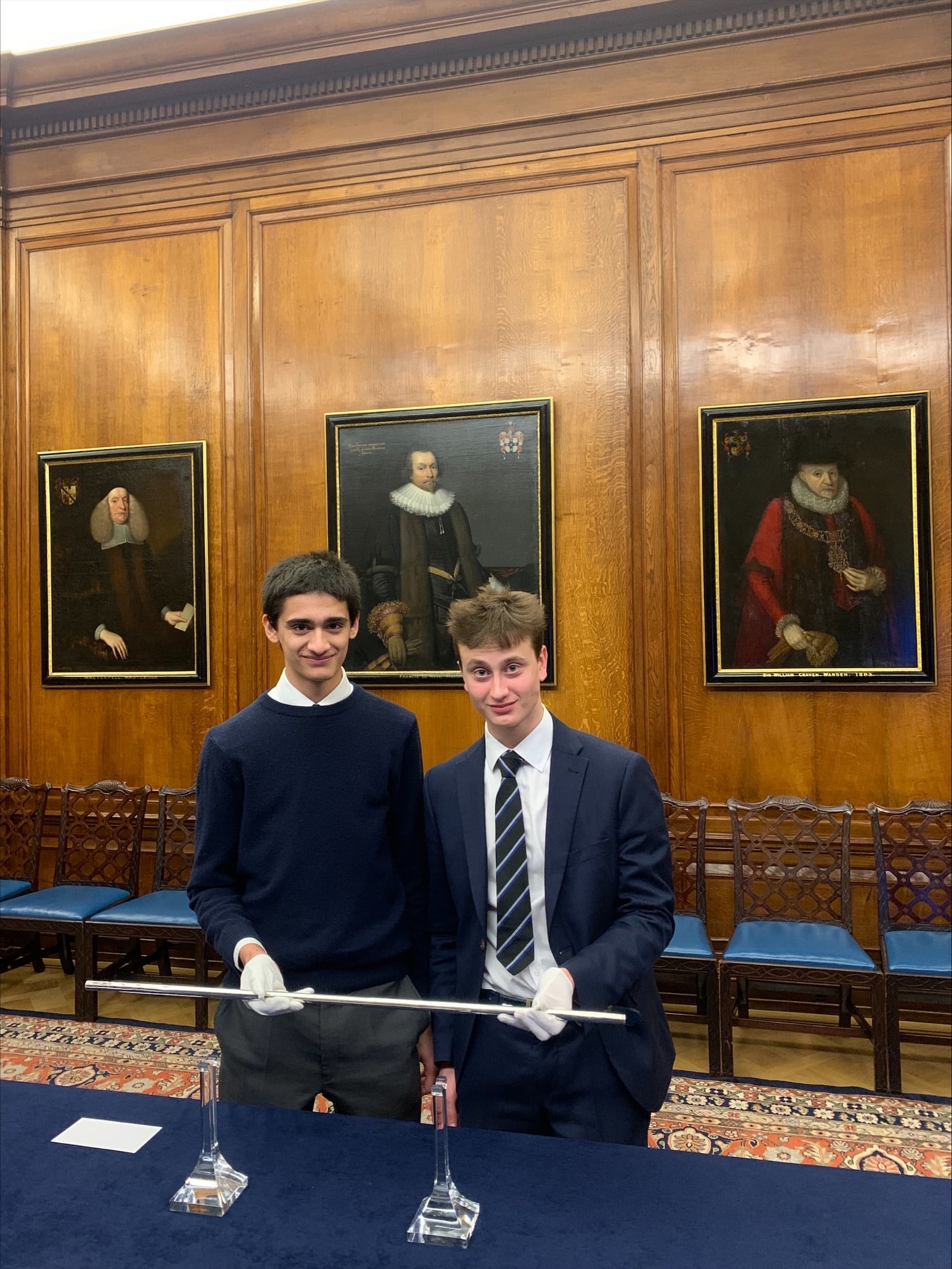
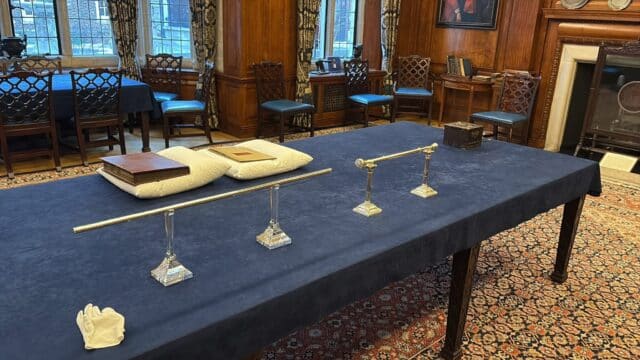
Ellie Glasser examined the evolution of the coat of arms of the Merchant Taylors’ Company and the portraiture of the Court Room, where members of the Company have met for centuries. The guests were also able to gaze upon the many early treasures of the Company including a silver-plated rod used for measuring yards of cloth.
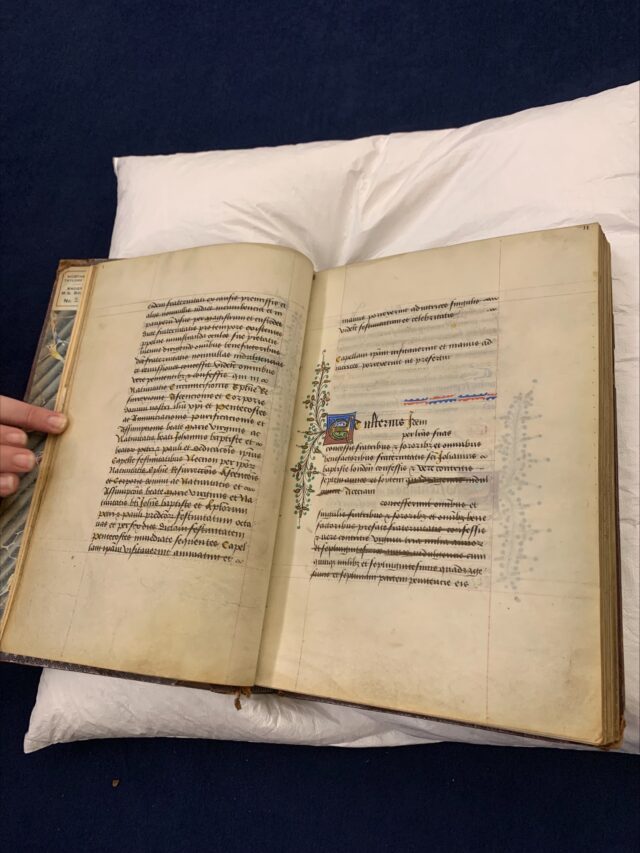
In the Library, Jonny Taylor invited the boys to investigate several rare books and pamphlets from the Hall’s collection. The boys used their historical instincts to analyse a precious compilation of sources principally concerning Merchant Taylors’ School’s first Headmaster, Richard Mulcaster, and his thoughts on education.
A wonderful evening concluded back in the in the Drawing Room with a spot of reflection about all we had seen. Before departure, the boys gazed upon the two oldest and most-prized treasures of the Company, the Pall or Hearse Cloths in the Western Corridor. These were originally used to cover distinguished members’ coffins. Although the origins of both cloths are unclear, one is thought to date from the last decades of the fifteenth century, whilst the other may have been made between 1520 and 1540. Both depict scenes of the life of St. John the Baptist, the patron saint of the Company, and are two of only fifteen pall or hearse cloths in the country that survived the Reformation.
The Society would like to thank Ellie Glasser, Professor Matthew Davies, Jonny Taylor, Stephen Freeth, Brigadier Christopher Coles, and all at Merchant Taylors’ Hall for a fabulous evening.