

I thought I would talk first about academic excellence, and what I think this looks like.
It is tempting to answer that excellence means good exam results (which I will talk about later, and is a particular measure useful for young people at school or university), but I am thinking about academic excellence in a broader sense than this. It is next tempting to answer that excellence is being brilliant at a particular subject. There is certainly something admirable about deep expertise. We need mathematicians who think deeply about mathematics, and linguists who understand the complexity of languages.
But I would like to talk today about academic excellence as being able to connect ideas together and find relationships between subjects that, at first, appear quite separate. The most important questions rarely belong to just one discipline; the world does not arrive neatly divided into academic departments like classrooms in a school.
Innovation and enterprise happen when the different things we learn collide. I am a biology teacher, and I say to my classes each year that the most significant ideas in life sciences have arisen where biologists and chemists work together, or with physicists, or with computational mathematicians, or with anthropologists or sociologists, with linguists and psychologists, with geographers, with engineers. The really powerful thinking happens when different ideas collide to make something new.
And on this theme, I will, I am afraid, tell you about my holidays. It is something that teachers do in assemblies, I know. Last year found myself in Brussels, the capital of Belgium, with rather a lot of time to spare. Brussels is a very attractive and interesting city – excellent frites (chips) and, of course, home to most of the European Union (EU) organisations – but as a tourist there is not a great deal to do. When you open the guidebook for “how to spend a day in Brussels” it gives you a few ideas; when you turn the page to find out “how to spend two days in Brussels” it tells you to leave the city and visit somewhere else.
I wanted to give the city a proper go, though, and set about to visit some less popular attractions in the city – and because it rains a lot in Belgium – attractions that are inside. So one morning I went to a museum next to the European Parliament called the “House of European History”.
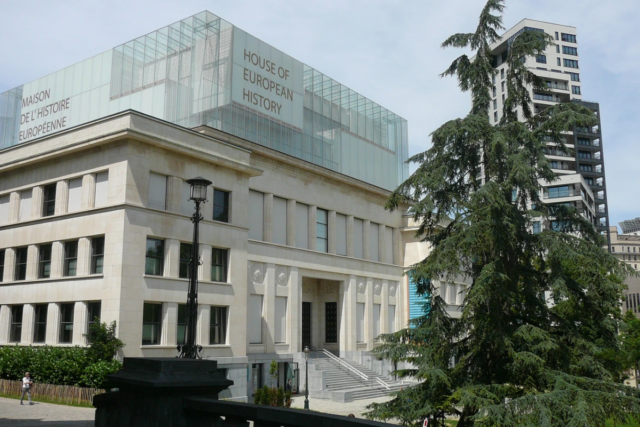
I’d heard vaguely of this museum beforehand because it had come in for some criticism when it opened eight or nine years ago – critics asked how, in a relatively small museum, do you possibly tell the thousands of years histories of 27 very different member states? Isn’t that biting off rather more than one museum can chew?
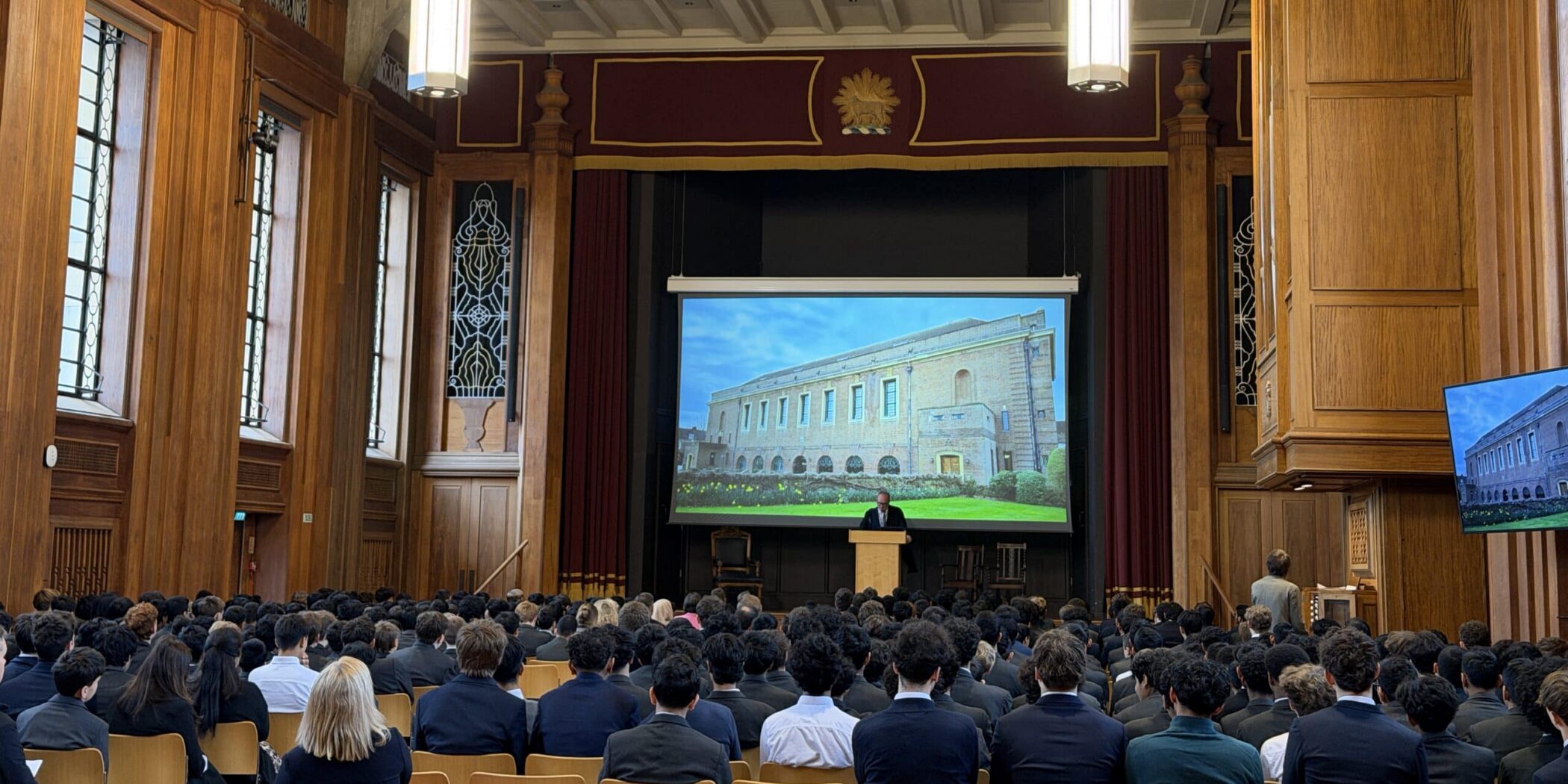
You can see from the picture that it is not particularly large – just four permanent galleries. Indeed, the building itself was previously a dental clinic. And the museum does take on a lot – there is, after all, a lot of European History. As you walk around you zoom between artefacts from Ancient Greece, the French revolution, enslavement and colonialization, the Communist manifesto, Industrial Revolution, World Wars, the Cold War, civil rights and even Swedish furniture design.
But in experiencing this breadth and juxtaposition of ideas I felt that those critics were asking the wrong question – the museum wasn’t trying to tell a comprehensive story of the whole of European history, it was challenging visitors to find meaning and connections in this diversity. By seeing so many things I had previously compartmentalised in my mind as different ‘topics’ – the reunification of Germany in the 1990s here, the Spanish Civil War in the 1930s there – and seeing these in the same room I started to think in new ways about what national identity might mean for all nations.
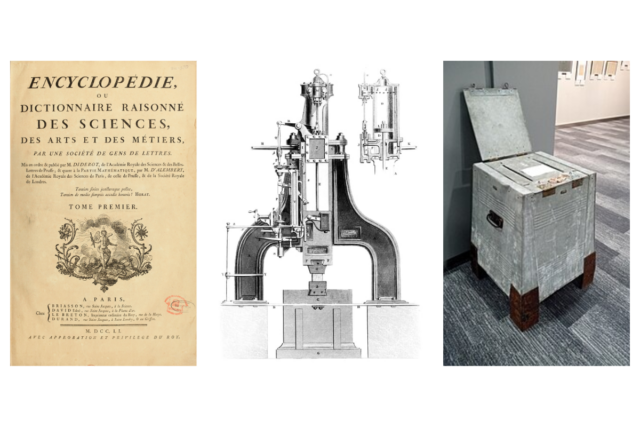
Here are three rather disparate objects spanning three centuries and different countries from the galleries.
Here, a volume of Diderot’s Encyclopédie, the great Enlightenment project that sought to gather and share all available knowledge. It took 40 years to compile – the Great-Great-Great-Grandfather of Wikipedia, if you will – and to examine it critically and rationally. This is just one of 28 volumes. Nearby stood a replica of a steam hammer from the Scottish engineer James Nasmyth, showing the technological transformations of the Industrial Revolution. Also nearby stood a ballot box from Finland. This is waist-height, from the first election in the world where women could both vote and were elected to seats.
My mind defaults to placing these objects into entirely different categories: literature and philosophy in one folder, science and engineering in another, politics and history in a third. Yet standing with sight of them all, they start to speak to each other.
I wonder what connections you can find?
Perhaps that the Encyclopédie shows a growing confidence that ideas should be questioned, tested and shared. That spirit of inquiry helped drive scientific and technological innovation, which transformed how people lived and worked. Those transformations in turn created new social and political pressures, leading people to demand a greater voice in how their societies were governed. Ideas became inventions; inventions reshaped society; society reshaped politics.
And standing there I realised (to my shame, as a Head Master) that this is the richness of your experience at school. You lurch from a lesson on French culture across the site to the Chemistry labs for a practical three minutes later, from studying a play written this year in the Drama Studio straight to centuries-old coastal formations in the Geography department. The diversity of your studies means your brains can, and will, find new meaning and reflection when you mash ideas from different lessons together. Think hard! Enjoy that feeling in your head. Embrace it! You are unlikely to find yourself later in life in another environment with such diversity of disciplines on each other’s doorsteps.
So, this is my challenge to you this term – find those connections and tell your teachers, each other, or visit my study to tell me. Tell us how what you’ve learned in Physics relates to Philosophy, or how what you’ve learned in English relates to DT. The most interesting questions, most important discoveries and most creative ideas rarely belong neatly in a single discipline.
One of my hopes for you all here at Merchant Taylors’ School is that you learn to see the world in this way – not as a collection of disconnected subjects, but a web of ideas you can collide to do extraordinary things.