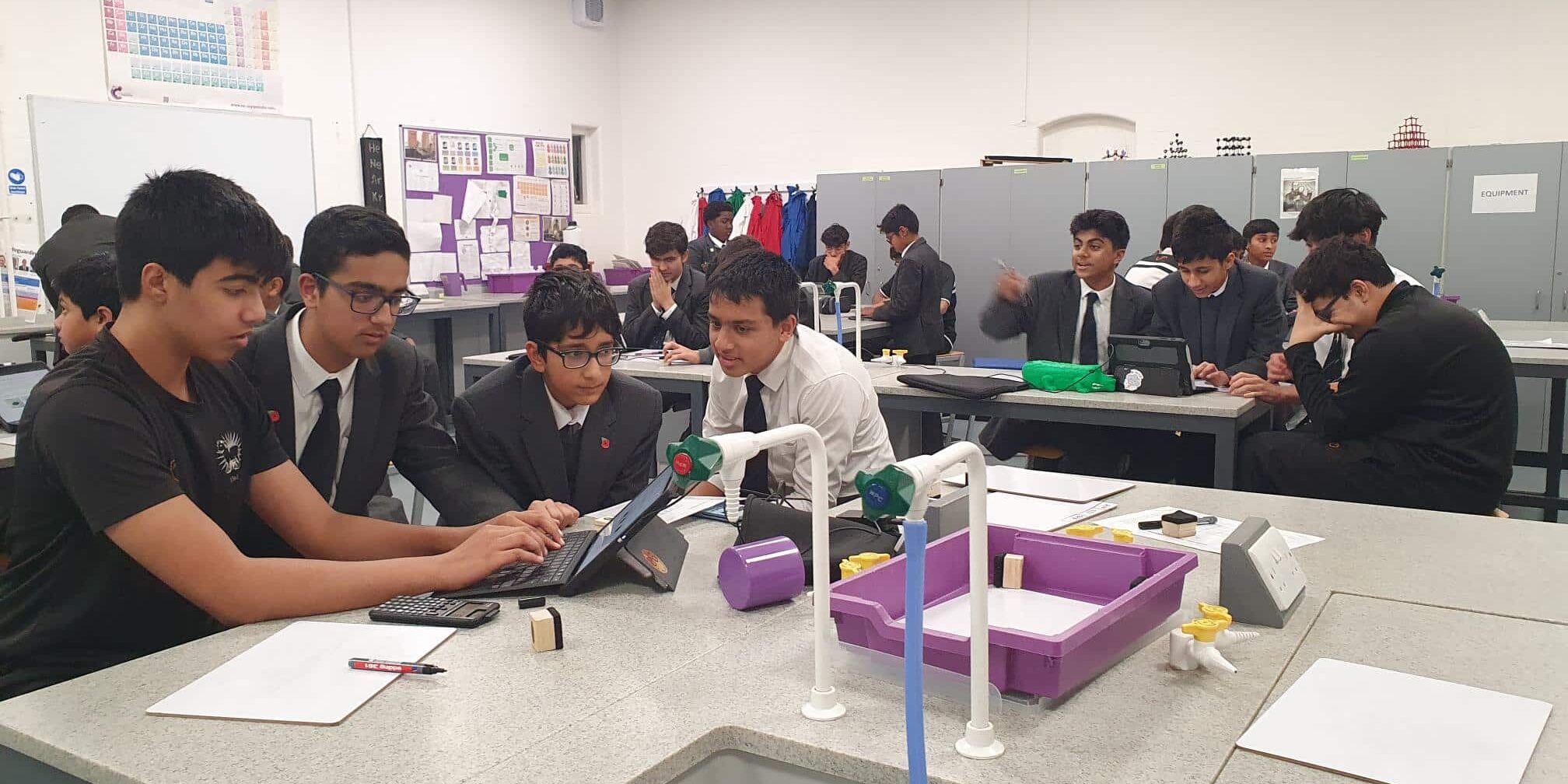


Writes Valentina Kotsuba, Teacher of French and Archit R. (Divs)
After attending a series of lectures by Ms. Kotsuba on What is Art?, Divisions Scholars were tasked with writing a discursive essay, arguing whether Marcel Duchamp’s Fountain qualifies as art. Students were expected to conduct research and cross-reference their points, with lectures based on Leo Tolstoy’s book, What is Art?. They could choose to argue either for or against the readymade under study. Thirty-six scholars submitted their essays, and it was a great pleasure to read their arguments, observations, and findings. Given the high quality of the submissions, six winners and three runners-up were selected:
1st place: Archit R. and Rohan N.
2nd place: Eashan S. and Dylan P M.
3d place: Nikhil D. and Aayan B.
Runners-up: Rian M, Henry O., Gabriel B.
Below is the essay by the overall winner Archit R.
When Marcel Duchamp submitted ‘Fountain’ – a standard urinal signed ‘R. Mutt’ – to an exhibition in 1917, he reopened a persistent question: Why is it Art? At face value, the piece seems not to be art at all. Yet through Tolstoy’s ‘What Is Art?’, it offers a different answer. Tolstoy defines art as the transmission of feeling, judged by sincerity, clarity, and infectiousness, and oriented toward the highest moral consciousness of its age.
‘Fountain’ may appear distant from that ideal, but both Tolstoy and Duchamp reacted to cultural decay and sought to restore or revive artistic life. Where Tolstoy wanted truthful feelings that unite people, Duchamp created a truthful response to an absurd world.
Tolstoy believed ‘art for art’s sake’ and that the worship of beauty had ruined art. Genuine art, he argued, unites people through true shared emotion: the artist must truly feel what is expressed, communicate it plainly to everyone, and evoke the same feeling in others. The highest art also embodies the ‘religious consciousness’ of its age, guiding people toward compassion and truth rather than prestige or pleasure. Judged by those standards, ‘Fountain’ seems a failure – puzzling rather than tender, provocative rather than uplifting. Yet Duchamp’s purpose and context alter that view.
Duchamp created ‘Fountain’ out of deep frustration with both art and society during the First World War. Alongside the Dadaists, he rebelled against a culture capable of mechanized killing yet still devoted to aesthetic luxury. By presenting a mass-produced urinal as art, he exposed the absurdity of those values. Rejecting ‘retinal art’, which merely pleases the eye, he pursued conceptual sincerity instead. The work became both protest and reflection – a deliberate mirror of cultural confusion. Like Tolstoy, Duchamp opposed vanity, elitism, and the worship of technique. His aim was to shock culture into questioning its senseless values. That drive to confront corruption through truth places him closer to Tolstoy than it might first appear.
Seen through Tolstoy’s lens, ‘Fountain’ meets more of his criteria than expected. Its sincerity lies in Duchamp’s moral reaction to a violent, hypocritical culture: presenting a urinal was an honest expression of outrage. Its clarity comes from simplicity – its bluntness makes it understandable to everyone. Its infectiousness appears in the reaction it provokes. Surprise and doubt are present in all its viewers, creating a shared experience of questioning. That equality – everyone equally uncertain and engaged – is itself democratic, accessible to all rather than to an elite few. Even if it lacks the tenderness Tolstoy prized, it unites its audience through shared confusion, turning chaos into community.
This bridge between irony and empathy reveals how ‘Fountain’ extends Tolstoy’s idea of feeling. Critics may object that Duchamp’s work is intellectual rather than emotional and therefore fails Tolstoy’s test that art must convey emotion. Yet this assumes too narrow a view of emotion. Tolstoy emphasised love, joy, and pity, but human feeling also includes modern emotions like irony, curiosity, and uncertainty. Duchamp communicates these precisely. The confusion the work creates mirrors his own doubts about society. Far from lacking emotion, ‘Fountain’ embodies a new kind of integrity – a truthful record of bewilderment in a traumatic century. Moreover, Tolstoy warned against art made merely for pleasure; Duchamp’s rejection of aesthetics and his ‘anti-art’ works refocus art on moral and intellectual truth.
For all their differences, both Tolstoy and Duchamp sought to cleanse art of vanity and return it to honesty. Tolstoy urged artists to abandon luxury and pretence; Duchamp stripped away aesthetic pride and commercial prestige entirely. Each democratized art in his own way – Tolstoy through accessible emotion, Duchamp through accessible form. Both exposed corruption and aimed to restore sincerity.