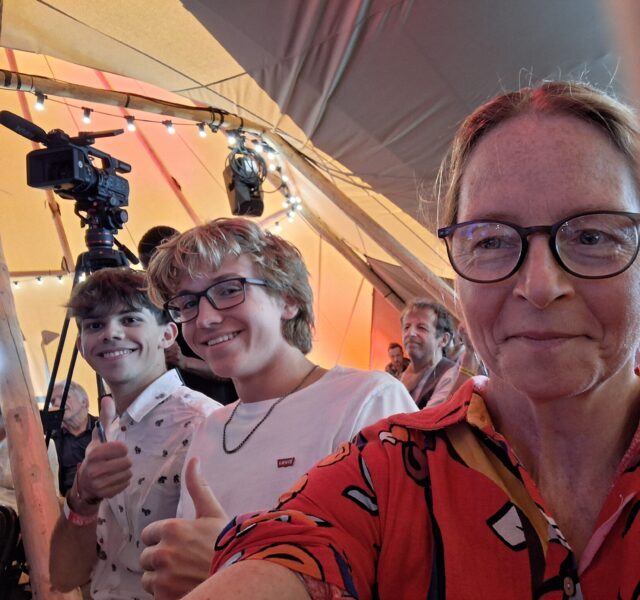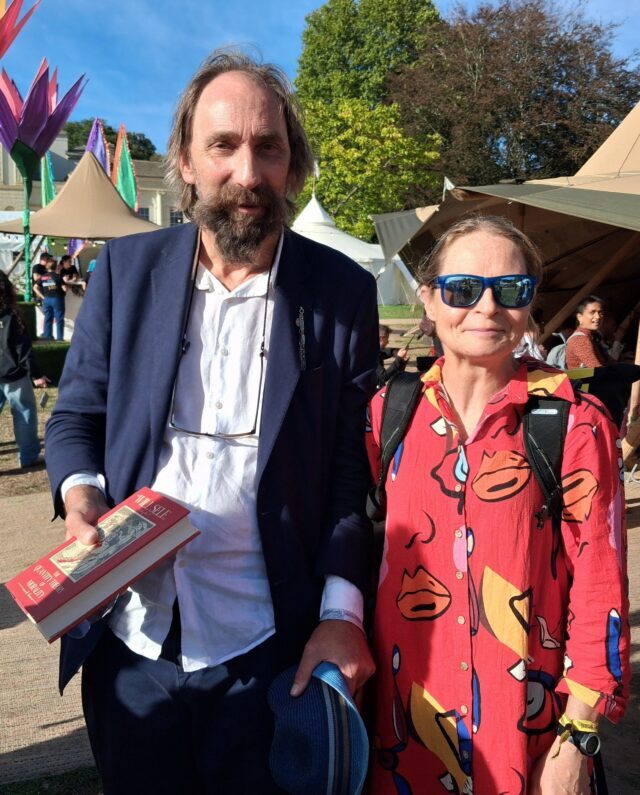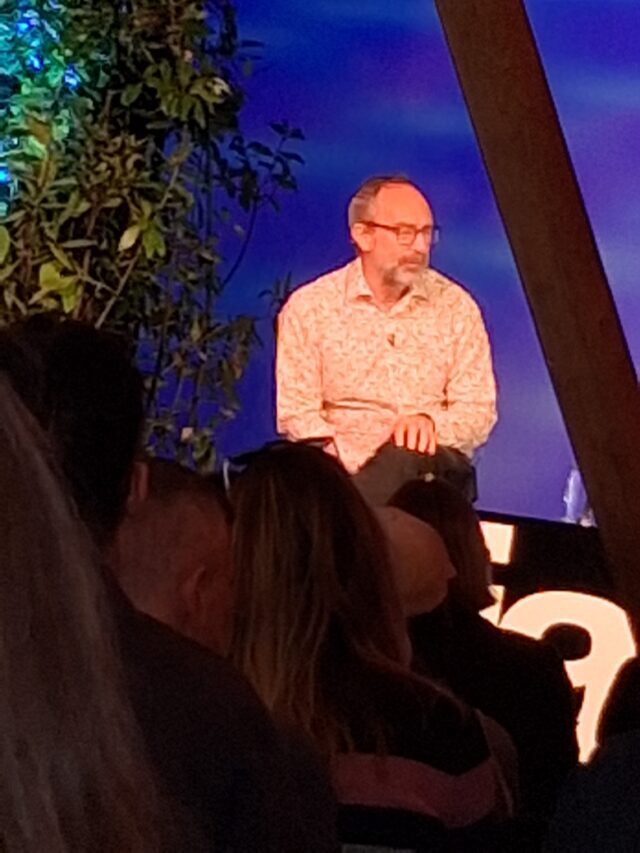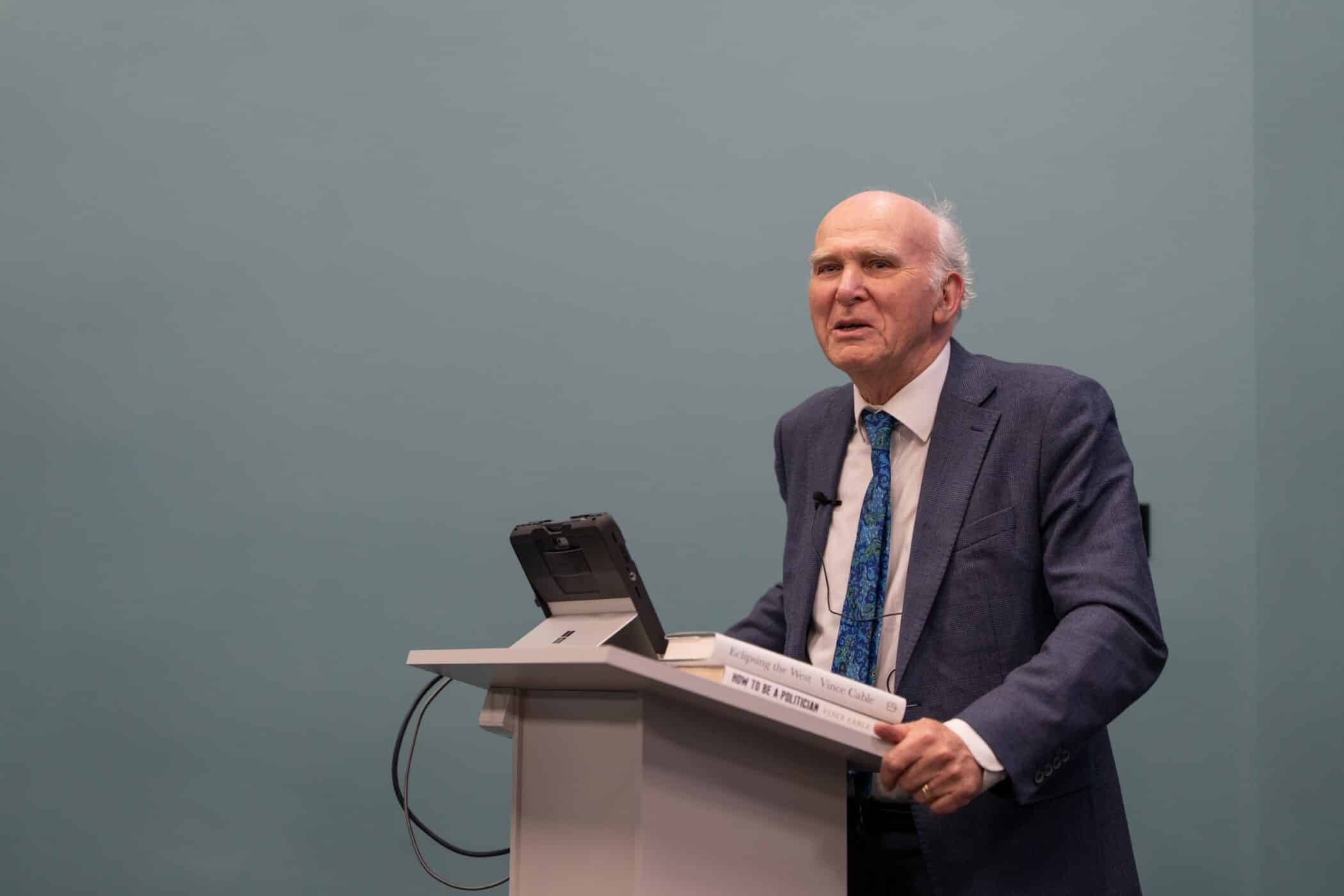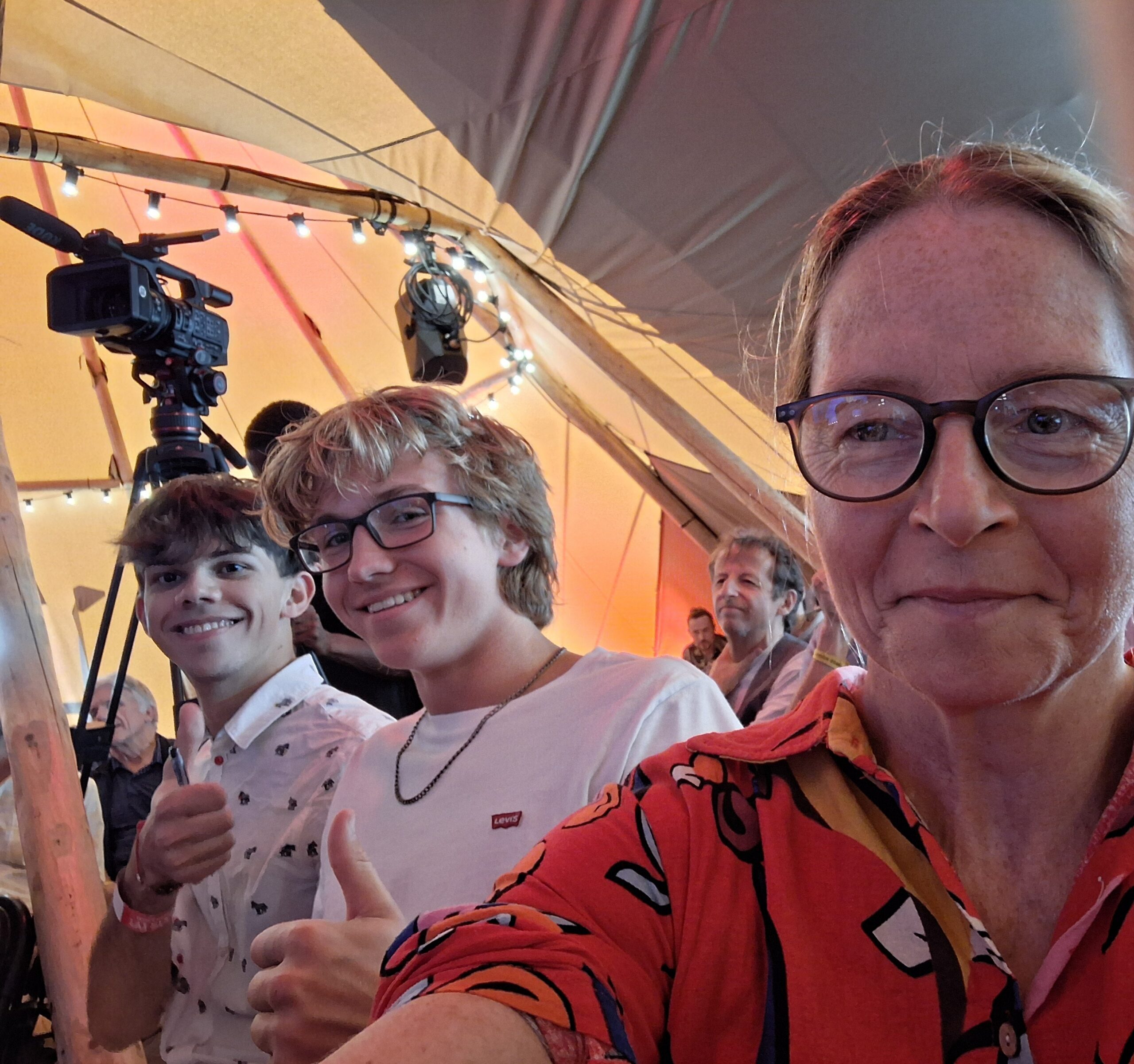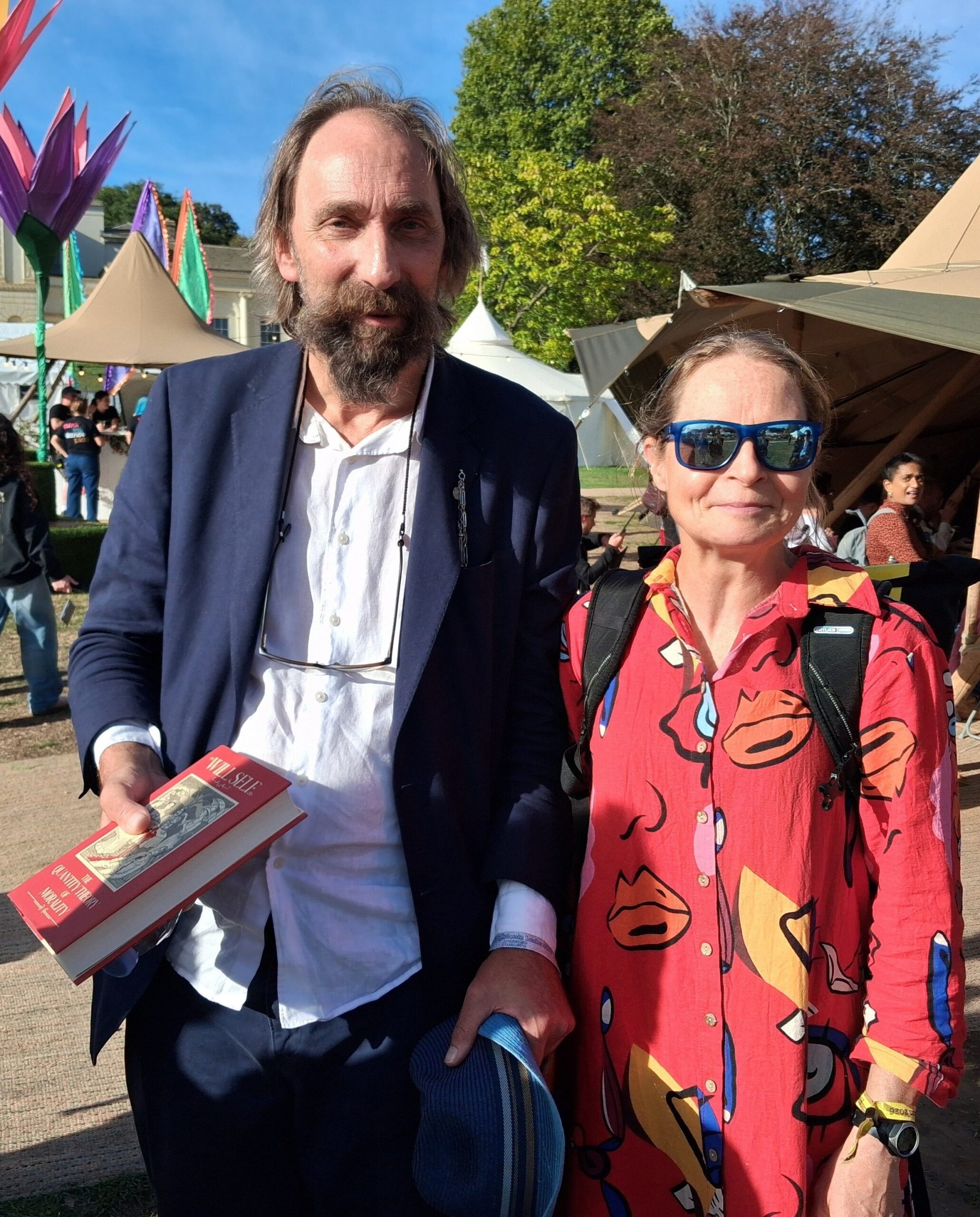

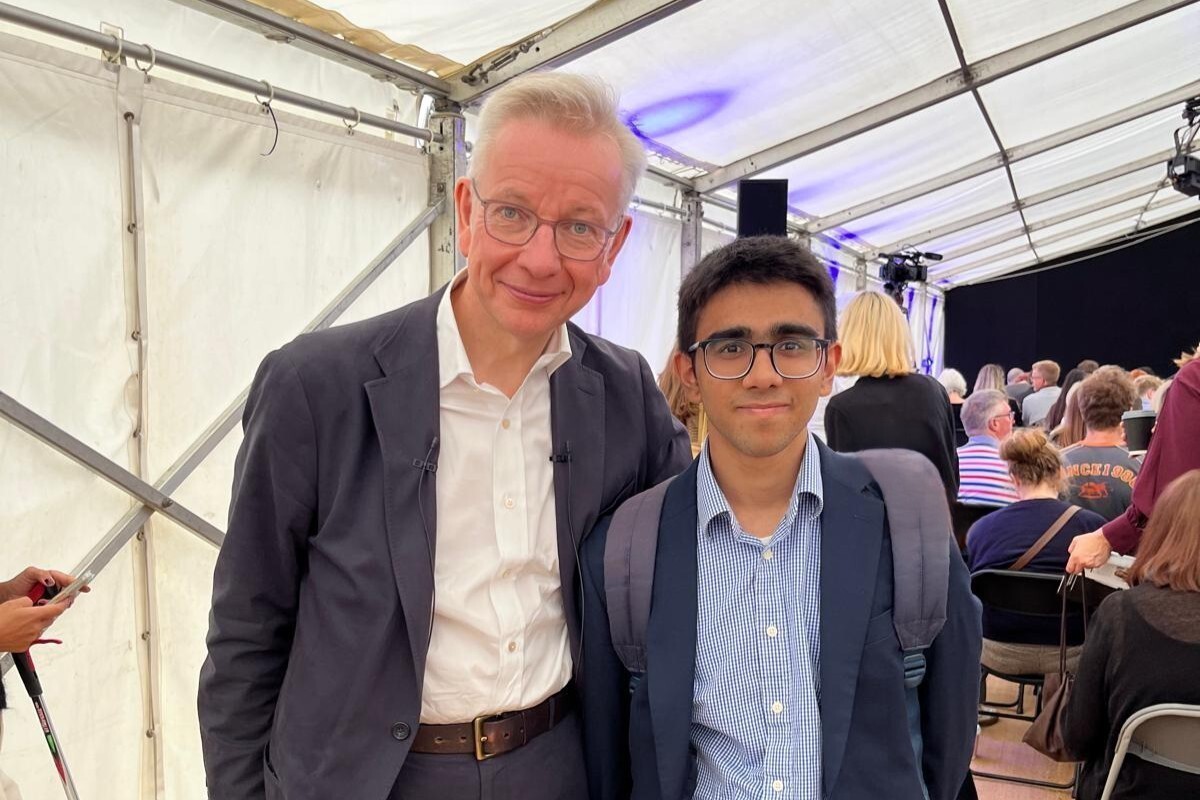
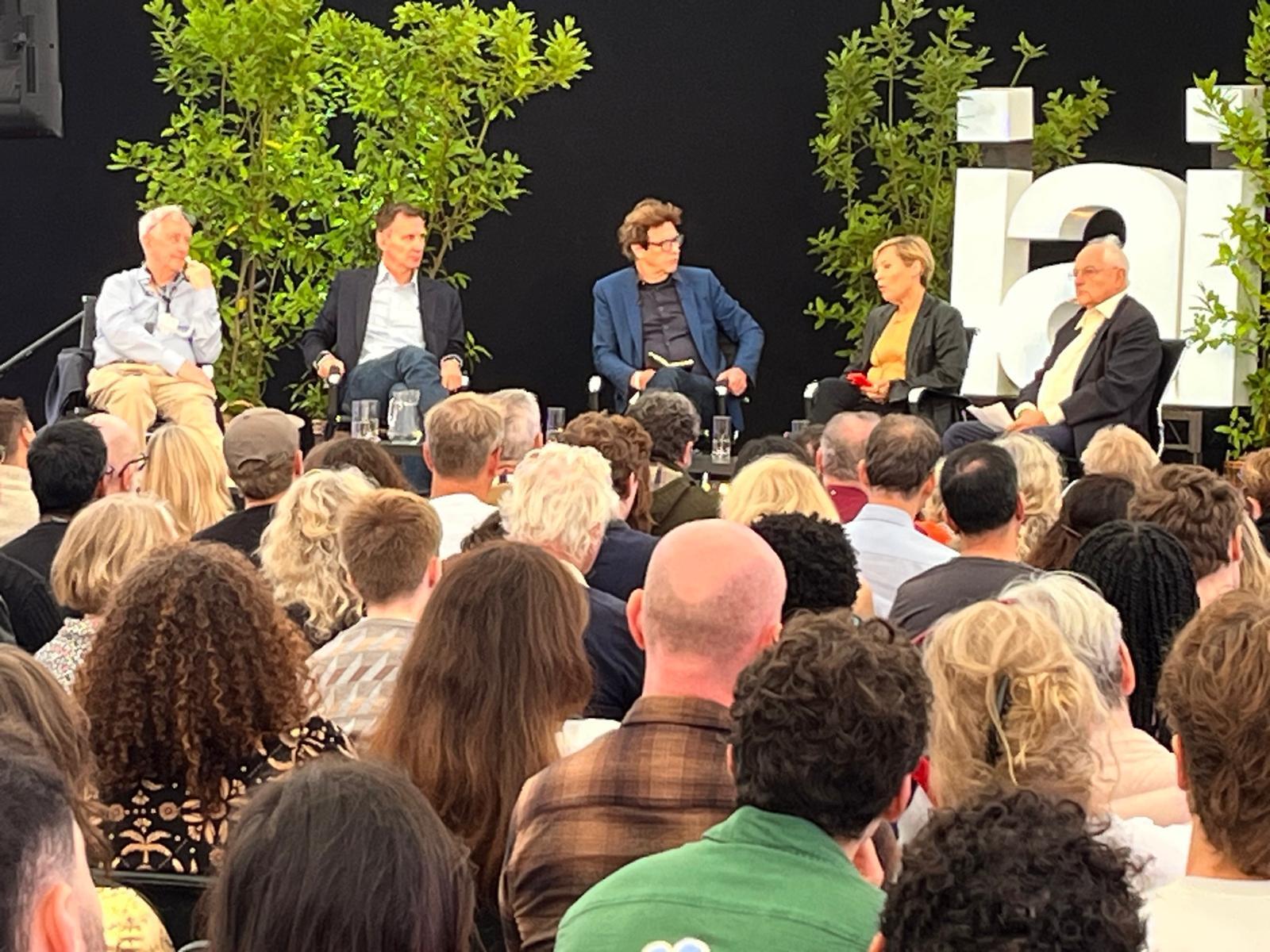
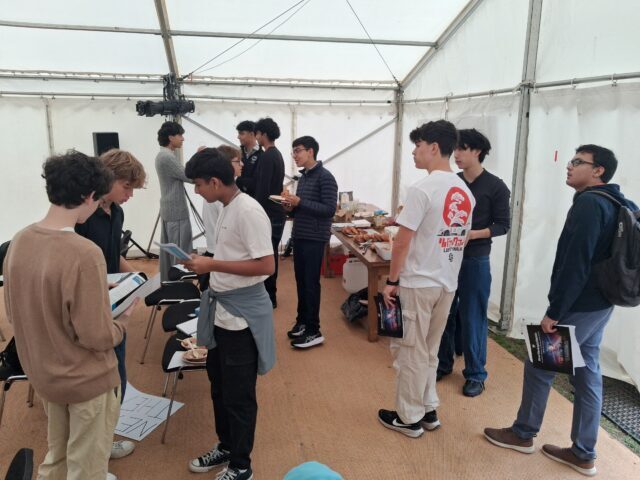
Last weekend, twenty Sixth Form pupils took part in the Sixth Form programme at the HowTheLightGetsIn Festival at Kenwood House, Hampstead Heath. They posed a range of insightful questions to the festival’s distinguished speakers, including Louis Theroux, Bryan Johnson, Catherine Liu, Will Self, Jimmy Wales, Nicola Sturgeon, Jeremy Hunt and Michael Gove, both in the main arenas and during chance encounters around the site.
Our pupils acquitted themselves admirably, making the most of every opportunity and demonstrating excellent conduct throughout the two-day trip. Leo B. (U6th) memorably asked Bryan Johnson a question that brought the debate to a close and made him laugh.
Below, one of our Upper Sixth pupils shares his thoughts on the two-day festival.
Writes Haroon S. (U6th)
What happens when you bring philosophers, scientists, economists, politicians, writers and leading thinkers together in one place and encourage them to question almost everything? Last weekend, at HowTheLightGetsIn at Kenwood House, I had the chance to find out.
The festival brings together voices from philosophy, science, politics and the arts to debate some of the biggest questions shaping society. What I liked most was that it did not feel like a conventional conference. Speakers challenged one another, audiences questioned assumptions, and many discussions left you with more questions than answers.
That was also true of some of the conversations I had during the weekend with Jeremy Hunt, Nicola Sturgeon, Michael Gove and Leo Varadkar. I asked Jeremy Hunt about the economic impact of Britain leaving the European Union. His response was that the UK had grown broadly on par with France. That led me to think about how difficult it is to measure the impact of a decision as significant as Brexit. Economic growth is only one measure. Trade, investment, productivity, wages and living standards can all tell different parts of the story. It showed me how a seemingly simple political question can quickly become much more complex.
With Nicola Sturgeon, I discussed the importance of the UK internal market in the context of Scotland’s constitutional future. What interested me was the practical economic side of independence. Political debates often focus on sovereignty and identity, but there are equally important questions about trade, businesses, supply chains and the movement of goods and services. Our conversation made me think more carefully about the economic relationships that sit behind the political arguments.
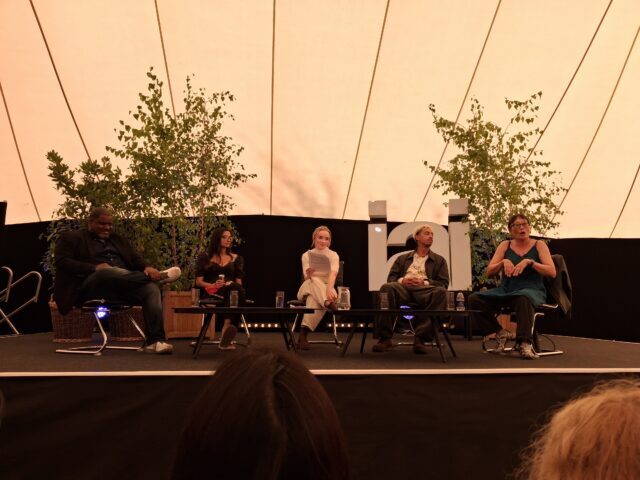
My conversation with Michael Gove focused on something very different: artificial intelligence and education. I asked what happens when AI begins to automate the cognitive skills that formal education has traditionally developed and assessed. After all, AI can already research information, summarise material, write text and solve increasingly complex problems.
So, what should education focus on if machines can perform more of these tasks?
I reflected that perhaps skills such as judgement, creativity, critical thinking, communication and curiosity will become even more important. The discussion made me realise that AI does not necessarily make education less valuable, but it may force us to reconsider what education is actually preparing us for.
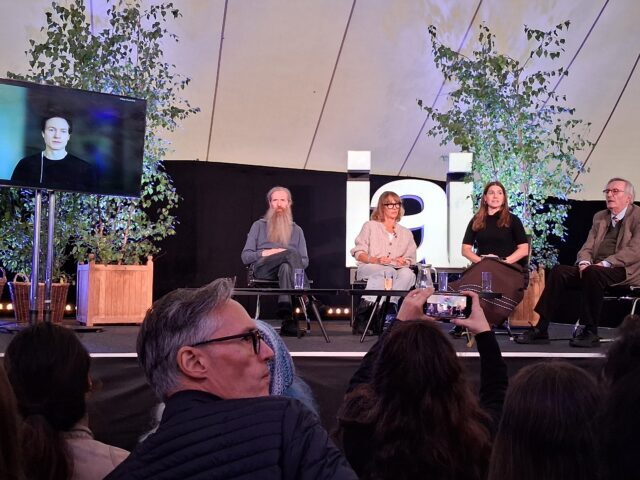
Later, with Leo Varadkar, I explored the question of data sovereignty. I inquired whether governments should consider public ownership of data centres used to store highly sensitive information. Governments and public services increasingly depend on digital infrastructure, much of which is operated by private technology companies.
This raises an important question: if data is becoming one of a country’s most valuable assets, should some critical information be stored on infrastructure that the public sector owns and controls? There are arguments on both sides. Private companies provide expertise and scale, but public ownership could offer greater direct control over certain types of sensitive data. What became clear to me was that decisions about data centres are no longer just technical matters. They are increasingly concerns about security, sovereignty and public policy.
Although these conversations covered very different subjects, I noticed a common thread running through them. Brexit raises questions about economic relationships. Scottish independence examines political and economic unions. AI challenges traditional ideas about education and skills. Data infrastructure prompts discussion about who should control the systems on which modern societies depend. This interweaving of disparate topics with universal ideas is what made the festival so thought-provoking. At school, we often work towards finding the correct answer. However, HowTheLightGetsIn reminded me that some of the most important questions do not have one simple answer.
Sometimes intelligent people can look at the same issue and reach different conclusions. Sometimes asking the right question matters just as much as finding an answer. Walking around Kenwood House and listening to people from very different fields, I came away with a simple thought: being curious is not about knowing everything. It is about being prepared to listen, question, and challenge your assumptions whilst continuing to think.
I arrived expecting interesting debates – I left not with neat answers, but with a greater desire to keep asking.