
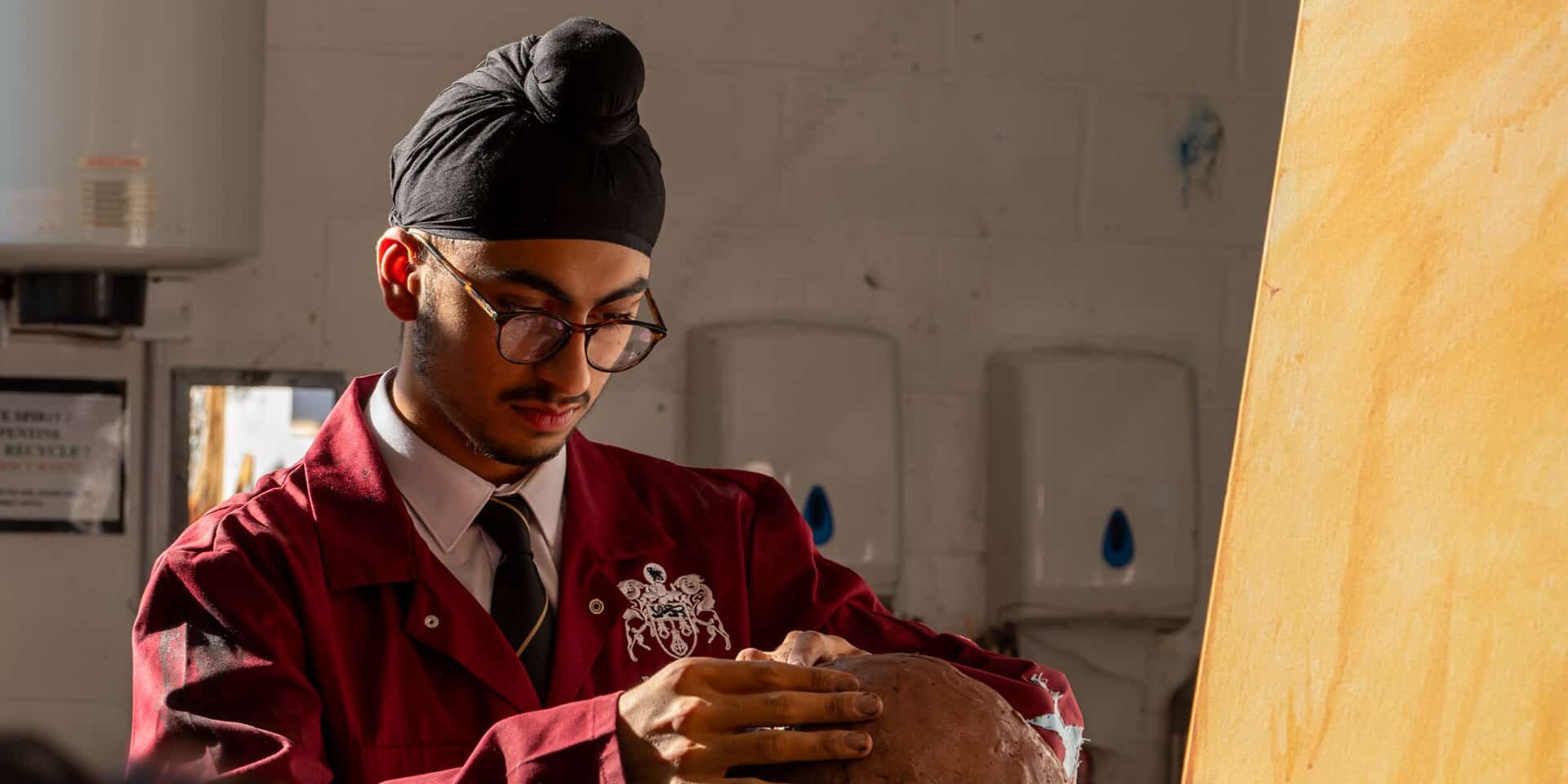
Writes Aman K. (L6th)
In the second instalment of Aman’s art interview series, Lower Sixth artist Yuvraj reflects on how his creativity has grown from childhood doodles to designing for the Taylors’ community. He shares the artworks that have shaped his perspective, the value he believes art holds for all students, and why creativity should be seen as expression – not perfection.
When did you find your love for art, and how has your taste changed since then?
Yuvraj describes his relationship with art as something that developed organically from childhood. He recalls constantly doodling and scribbling—small acts that, in hindsight, marked the beginnings of a creative instinct that would grow over time. As he matured, he began to experiment more deliberately with different techniques and mediums, discovering a deeper personal connection to artistic expression. A particularly defining moment came at Merchant Taylors’ School, which he refers to as a “lightbulb moment.” Exposure to the school’s creative environment revealed to him the sheer breadth of opportunities available in the arts.
Since then, his artistic taste has evolved considerably. The lockdown period allowed him to explore his creativity more intensely, giving rise to a renewed passion for visual experimentation. This culminated in several contributions to the school community, including designing posters for the music department and producing the school’s sports kit. He notes that he has become more willing to try new styles and approaches, reflecting a broader and more adventurous understanding of what art can be.
What is your favourite art piece and why?
Yuvraj’s favourite artwork is Langar by contemporary Sikh artist Jatinder Singh Durhaily. He is particularly moved by its powerful representation of Sikh culture, with langar symbolising seva – the practice of selfless service. For him, the piece captures a profound sense of community spirit and shared humanity, offering a visual narrative that feels both culturally resonant and personally meaningful.
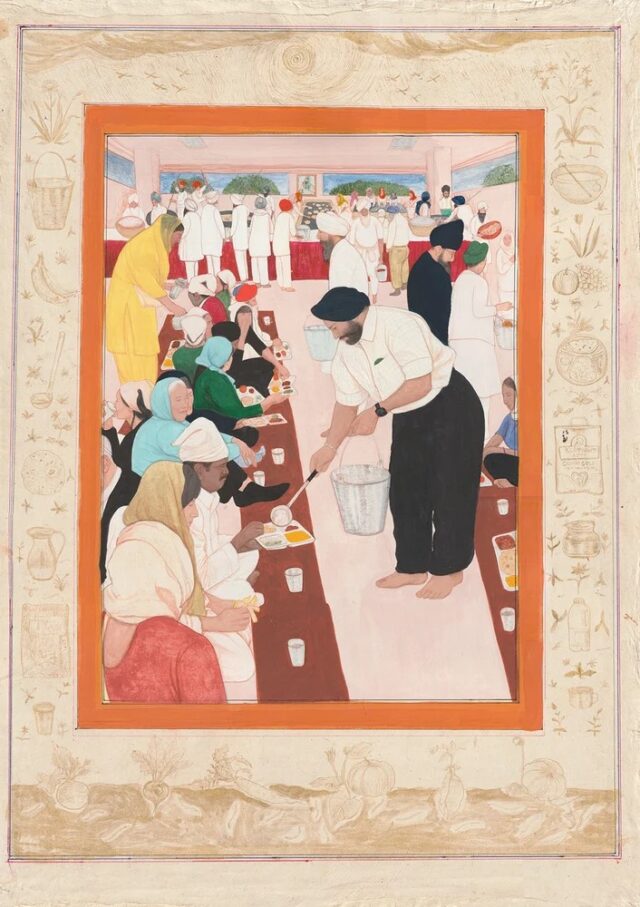
Photo credits @ Jatinder Singh Durhailay – Journal
He also admires the material and technical aspects of the piece. Created using recycled, handmade paper, the work reflects a thoughtful engagement with sustainability and craft. Yuvraj points out that the illustrations are far from arbitrary; many depict the actual ingredients used in preparing the communal meal. He finds that this attention to detail reveals the unseen work behind an act of generosity that may appear simple, giving the artwork a layered depth.
If you had to pick one piece of art that all students should see, what would it be and why?
Yuvraj recommends two works that left a lasting impression on him. The first is a minimalist yet strikingly large piece he encountered at an exhibition in Sweden by the artist Roscoe. Although the work appears simple at first glance, its scale and subtle detail challenged him to look more carefully, demonstrating how minimalism can possess unexpected complexity. He believes that such works encourage students to approach art with curiosity rather than assumption.
He also highlights Ploughing in the Nivernais, a monumental 19th-century painting he saw in France. Spanning half a gallery wall and set within an ornate golden frame, the piece impressed him with its ambition and sheer presence. He feels that exposing students to works of this magnitude can deepen their appreciation of art’s immersive and transformative power.
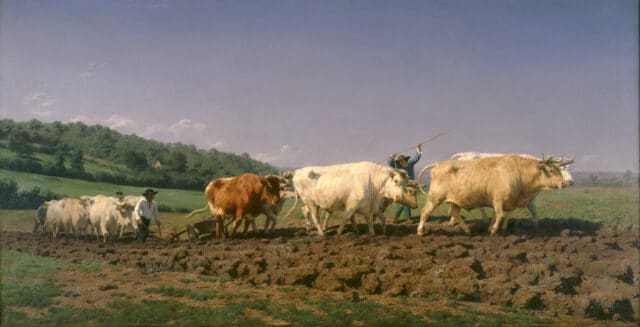
Photo credits @ wikiart.org
How do we encourage students who may not feel naturally talented at art to still enjoy and benefit from creativity?
Yuvraj challenges the widespread belief that artistic value is tied to hyper-realism or technical precision. He argues that art is fundamentally subjective, shaped by individual ways of seeing the world. The notion that only “realistic” pieces are good can, he feels, restrict students’ confidence and desire to experiment. Instead, he believes that creativity should be seen as a means of expression—where emotion, perspective and imagination hold as much importance as technique.
He suggests that schools could broaden students’ exposure to different forms of art, particularly modern and contemporary works that may feel more approachable. He also notes that AI could play a significant role in widening access to global art, allowing students to explore diverse styles and cultural traditions. This would help shift the focus from innate talent to personal exploration and creative engagement.
What makes art valuable?
To Yuvraj, art holds its value in its ability to capture moments—whether emotional, personal or historical—and transform them into a visual form that resonates with viewers. He believes that art becomes especially meaningful when it preserves a significant moment or connection, such as a memory shared with family. In this sense, value is not derived solely from technical achievement but from emotional depth.
He emphasises that art’s subjectivity is central to its significance. There is no “bad art,” he asserts, nor a single correct way to interpret it. Instead, value lies in the dialogue between the artwork and the viewer, shaped by individual experiences and cultural context. Through this lens, art becomes a uniquely personal and expressive medium, open to everyone regardless of background or skill level.